Built by people who've actually run the events.
CorSports is the platform we wanted while we were on the other side of the spreadsheet. Two co-founders, two decades of running events between us, one shared frustration with how the operations side has been taped together.
Two operators. Twenty years between us.
We have been the host union, the team manager, the match commissioner and the venue operator, different sides of the same spreadsheet, and it was wrong on all of them. Six years working Sevens test matches together was long enough to learn that the problem is never the people. It is that the tools were never built for this.
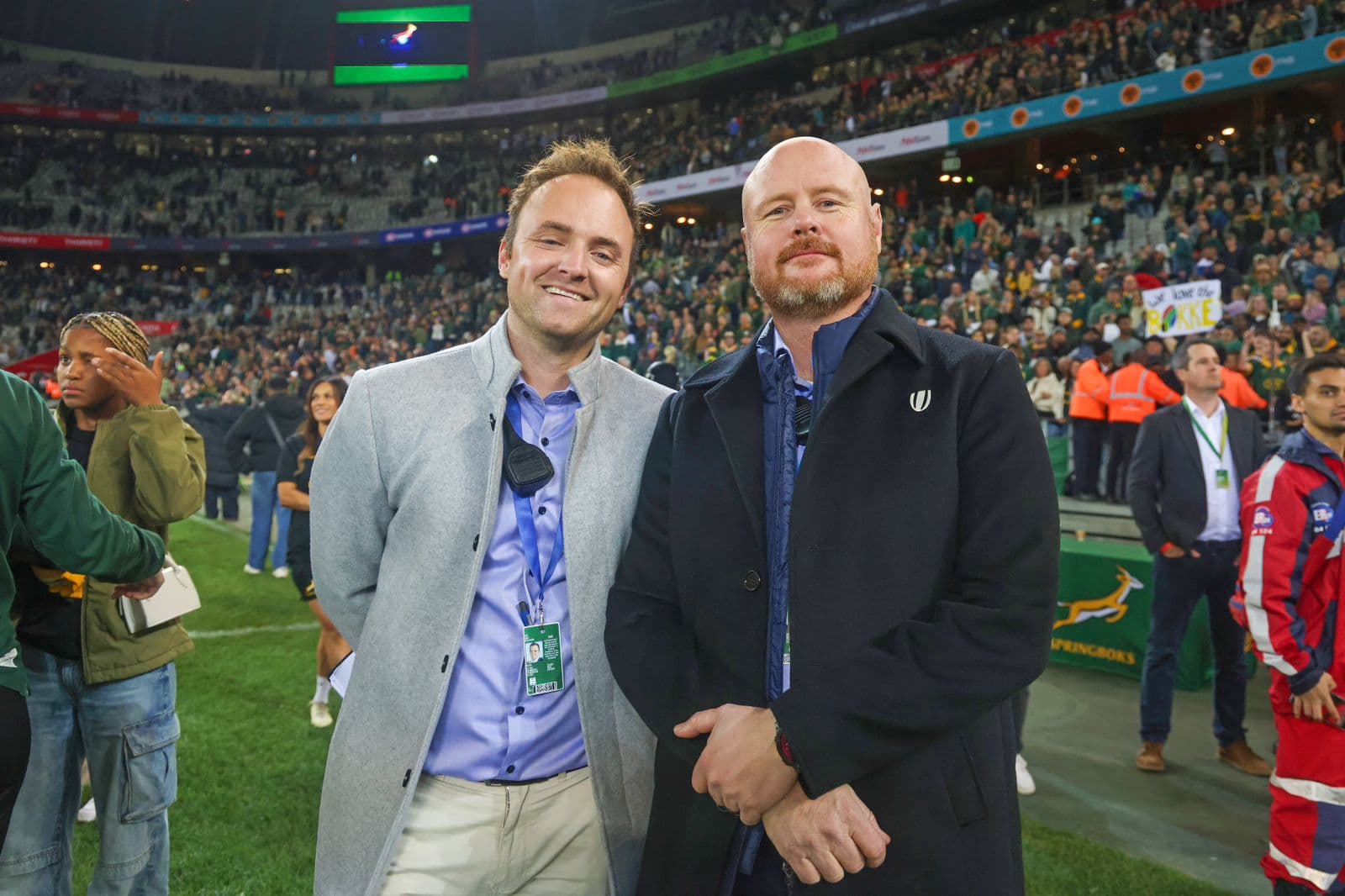
Twenty years in rugby operations. Competitions Manager at SA Rugby, where the draw, the calendar and every fixture hanging off them were his problem, then on the road with World Rugby for the Sevens Series. He founded CorSports & Event Management on the back of that. If a format, a law variation or a tournament regulation is in this platform, it is because Coris has had to enforce it with a phone in his hand.
An active match commissioner. The run of show for a Test match is his day job rather than a feature he specified, which is why the timing model works the way it does. He ran Team Services for the SVNS World Cup and has spent six years working Sevens test matches alongside Coris. He is also CTO at AddPay, which is where the payments and infrastructure half of this comes from. He writes the software.
The principles we won't break.
These aren't marketing language. They're the operating principles for the build.
- 01
Operator-first, always.
Every feature ships with a question: would you actually use this on the day? If the answer's 'maybe in v2' it gets cut. Operators have spent years working around bad tools. They don't need a new one to work around.
- 02
Freemium by design.
Every product has a Free tier that's genuinely useful, not a 14-day trial or a feature-stripped demo. A small club paying nothing should still get real value. Sophistication is monetised; the basics aren't.
- 03
Rugby-first, on purpose.
We started out building for any sport and it made the product worse. Every generic decision quietly removed the thing an organiser actually needs. So we stopped. This knows a Sevens red card is permanent and a Fifteens one is not, that a conversion is thirty seconds in the short game, that two sides in similar shirts is a World Rugby policy matter. None of that is configuration. Venue booking travels to any sport; the rest of it is rugby, and that is the point.
- 04
Configurable without dev gatekeeping.
If a sensible operator could reasonably need to change a setting without a code release, that setting lives in the UI. We don't make customers raise tickets for things they should own themselves.
- 05
Engineering blueprint, not marketing veneer.
The platform is built like a serious operator's tool. Multi-tenant from day one. Audit log on every state change. Tenant-isolated queries. We make architectural decisions like the platform's going to outlive us, because it should.
Why this exists.
The longer version is not dramatic. We kept running events off the same three tools: a spreadsheet for the fixtures, a WhatsApp group for the crew, and a PDF that was already wrong by the time it was emailed. And we kept losing the same hours to the same problems.
Kick-off moves. It always moves. And when it does, forty rows of a run sheet are wrong, every one of them is somebody's cue, and the fix is a person retyping it while the match is starting. That is not a hard problem. It was just never anybody's job to solve.
So it got built the way the work actually goes: a fixture list entered once, a run of show that moves when its anchor does, and a link you can hand a visiting team manager without creating them an account. Nothing in it is speculative. Every piece exists because one of us needed it on a Saturday and did not have it.